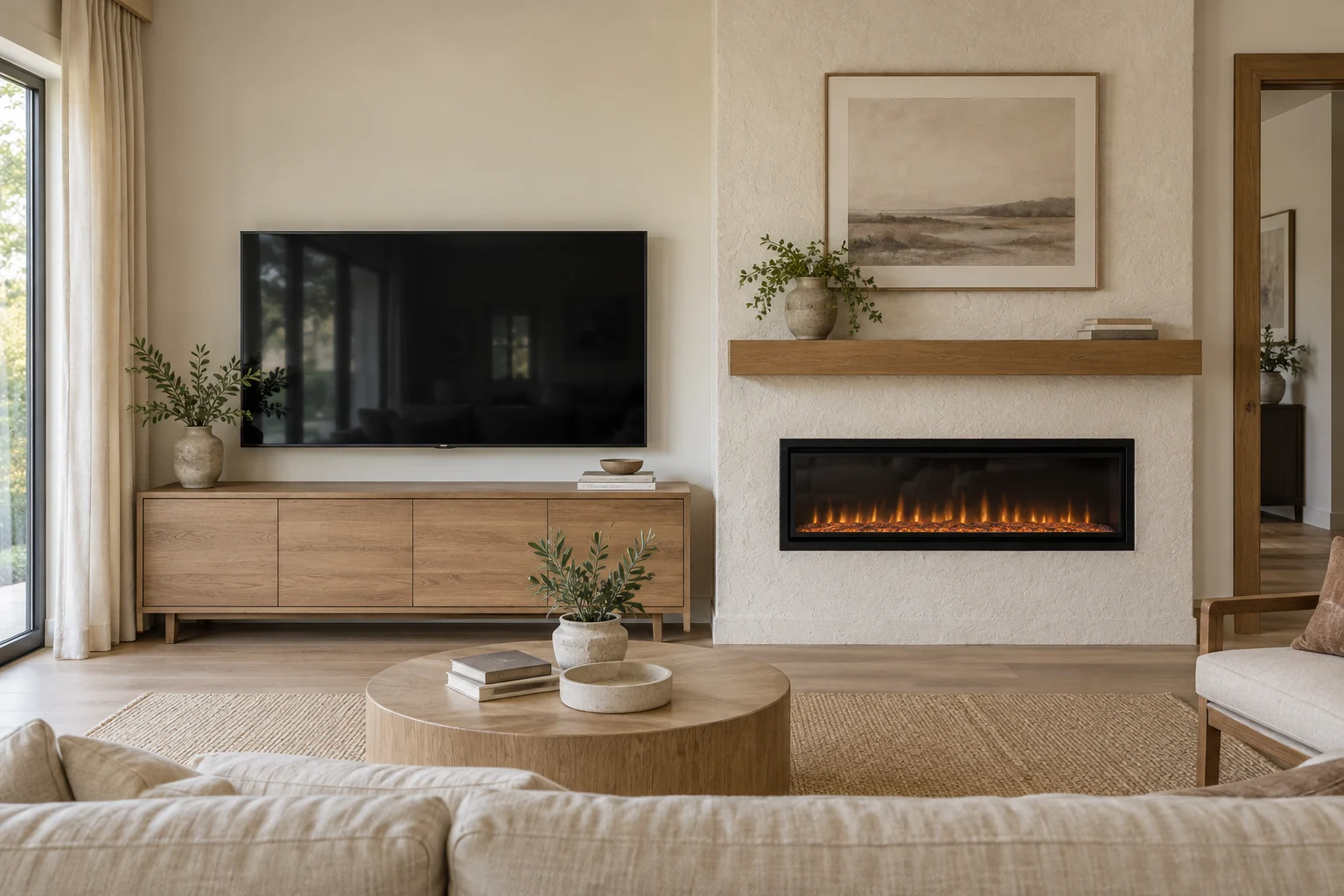
A television above a fireplace can consolidate two focal points, but it should be a decision made around the actual equipment and seating arrangement. A photograph cannot tell you whether a specific fireplace and television combination is suitable. This guide focuses on planning an electric fireplace wall; gas and wood-burning fireplaces need their own assessment.
Start with three checks: the appliance requirements, the television requirements and your viewing comfort. If the layout fails one of them, change the arrangement before the wall is built.
1. Identify the exact fireplace and television
Collect the model numbers and current instructions for both products. The fireplace documentation establishes its permitted installation arrangement, clearances, ventilation and access requirements. The television documentation addresses operating conditions, mounting and ventilation.
There is no universal safe gap for every combination. A mantel also does not automatically make an unsuitable arrangement acceptable. Have the proposed installation checked against the selected products rather than copying dimensions from an unrelated project.
2. Test the view from the sofa
Use removable tape to mark the proposed screen outline on the wall, then sit in your usual viewing position. Consider how you watch television: upright, reclined, from a sectional or from another part of an open-plan room.
If the screen feels uncomfortably high, look at the whole stack of elements. The fireplace, mantel, gap and television all contribute to the final height. Increasing the wall's visual symmetry does not necessarily improve the experience of watching a film.
A side-by-side arrangement may be worth considering. So may a television on another wall. The best solution is the one that works for daily use, not the one that combines the most features in one elevation.
3. Plan the bracket and equipment access
The decorative finish is not a substitute for appropriate support. Have the mounting method assessed for the wall and television. Include the bracket in the layout early, particularly if the screen is recessed or uses a moving mount.
Make sure someone can connect cables, operate the mount and remove the screen later. A fitted opening that looks precise but prevents servicing creates an avoidable problem. Plan for the soundbar and other equipment at the same time.
4. Resolve power and cabling before finishing
List every device that needs power or a signal connection. Identify where consoles, streaming devices and other components will live, how they will be ventilated and how they can be reached. Have electrical requirements handled by the appropriate professional.
Do not design a finished wall around hiding an extension cord. The aim is a planned, serviceable arrangement. Our media wall electrical and lighting checklist covers the questions to raise.
5. Review the wall as a whole
Once the technical arrangement is established, coordinate the surround, shelving and lighting. Keep enough visual space around the screen so the television is not squeezed between competing details. Check reflections from windows and decorative lighting from the actual seating position.
If a dark screen dominates the room, a darker surrounding finish may reduce its contrast. If you prefer a light wall, accept the television as a visible object and give it a deliberate proportion. Neither approach requires adding more decoration.
Further reading
Napoleon's fireplace height guide discusses the relationship between appliance choice and viewing comfort. Your specific equipment instructions govern the installation.