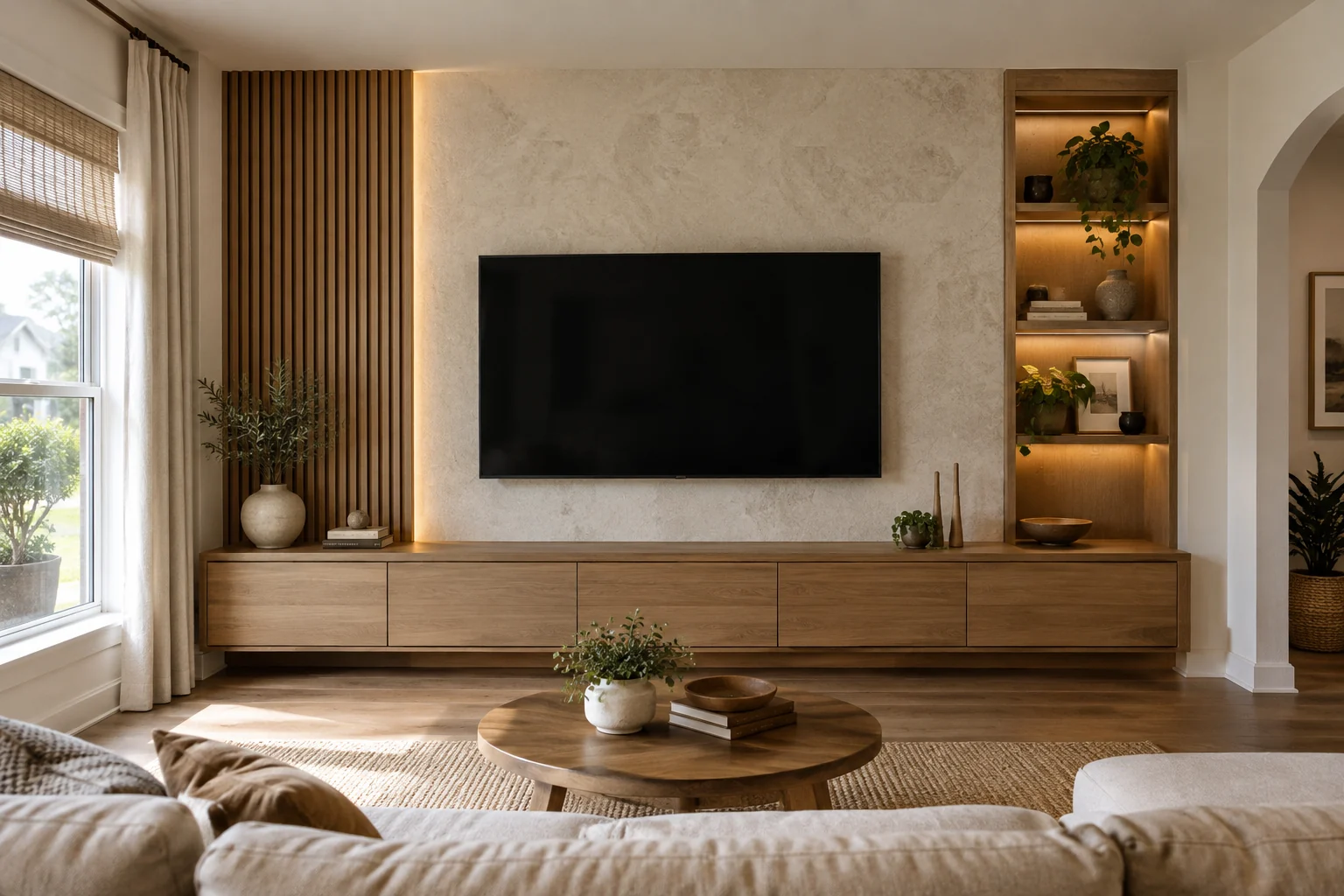
A custom media wall budget depends on what you want the wall to include. A decorative backdrop for an existing television is a different project from a full wall of cabinetry with a recessed screen, electric fireplace and integrated lighting. Comparing those two installations by wall width alone will not give you a useful answer.
For homeowners in Orlando and Central Florida, the best starting point is a defined scope: the wall dimensions, the equipment you plan to keep, the finish you prefer and the storage you need. This guide explains those decisions without presenting an unverified dollar range as a quote.
Start with the type of media wall
A decorative TV backdrop concentrates the work on the visible wall finish and television arrangement. It can be a practical option when you already have suitable furniture and do not need additional storage.
A media wall with cabinetry adds usable storage, but also introduces decisions about cabinet depth, doors, drawers, hardware and finishing. An open display shelf and a fitted drawer cabinet are not interchangeable items in a proposal.
A media wall with a fireplace adds an appliance and installation requirements. The fireplace model should be selected early enough for the design to accommodate its dimensions, ventilation, access and clearances. See our fireplace wall budget guide for that part of the project.
Five decisions that change the scope
- Wall dimensions and access. Height, corners, stairs and room access can affect preparation and installation. A tall wall is not simply a short wall with more panels.
- Finish and material. Painted millwork, wood veneer, solid wood, porcelain and stone require different fabrication and finishing approaches. The complete installed assembly matters more than the advertised price of one panel.
- Television arrangement. Keeping a screen surface-mounted differs from building a fitted recess. Plan for the actual television, bracket, connections and future removal.
- Storage. Decide what must disappear behind doors and what should remain on display. This prevents paying for cabinetry that does not solve a real problem.
- Power and lighting. Existing outlet locations, lighting controls and equipment access can change the work required. Plan these before the finished surface is installed.
Compare proposals using the same checklist
Ask each provider to identify the finish, dimensions and storage arrangement being priced. Then check whether the proposal includes design, materials, fabrication, finishing and installation. Clarify the television bracket, fireplace supply, electrical work, wall preparation, room protection and cleanup. These items should not be assumed to have the same treatment in every estimate.
A lower total may reflect a simpler design or a different scope. A useful comparison explains the difference rather than treating every media wall as the same product. Keep optional upgrades separate so you can see what changes when you remove one.
Where to simplify without losing the design
Choose one main feature and let the other elements support it. For example, a carefully proportioned wood panel can do more for a room than several competing finishes. Keep an existing console if it already works, or reduce display shelving if the household needs closed storage instead. Ask for a simpler version of the same layout before abandoning the idea altogether.
What to send for a preliminary estimate
Send a straight-on photograph, one wider room view, approximate wall width and height, your city or ZIP code, and your television model or dimensions. Add an inspiration link and say which parts of the example you like. Our photo and measurement checklist makes this easier.
A preliminary range helps establish a direction. The final scope and price need the project's actual conditions and agreed selections.